Some games grab your attention because of great artwork on the box. Some snatch your interest because of a good review you saw on Tik Tok. In this case, Three Sisters drew me in with the name alone and, boy, am I glad I gave it a try because it is easily in my top five favourite games now!
The “Three Sisters” in this sense refers to a traditional Indigenous method of planting crops in a way that they efficiently benefit one another. Corn, beans and pumpkins (any squash) are common and prolific crops in North America, making up much of our early diets, and still do today! Corn is planted first to support the climbing beans, the beans are planted to draw nitrogen out of the air and add it back into the soil for nourishment and the pumpkins provide excellent ground cover to prevent weeds from interfering with growth. In the board game version of this concept though, you'll be doing much more on your little farm than just planting corn, beans and pumpkins!
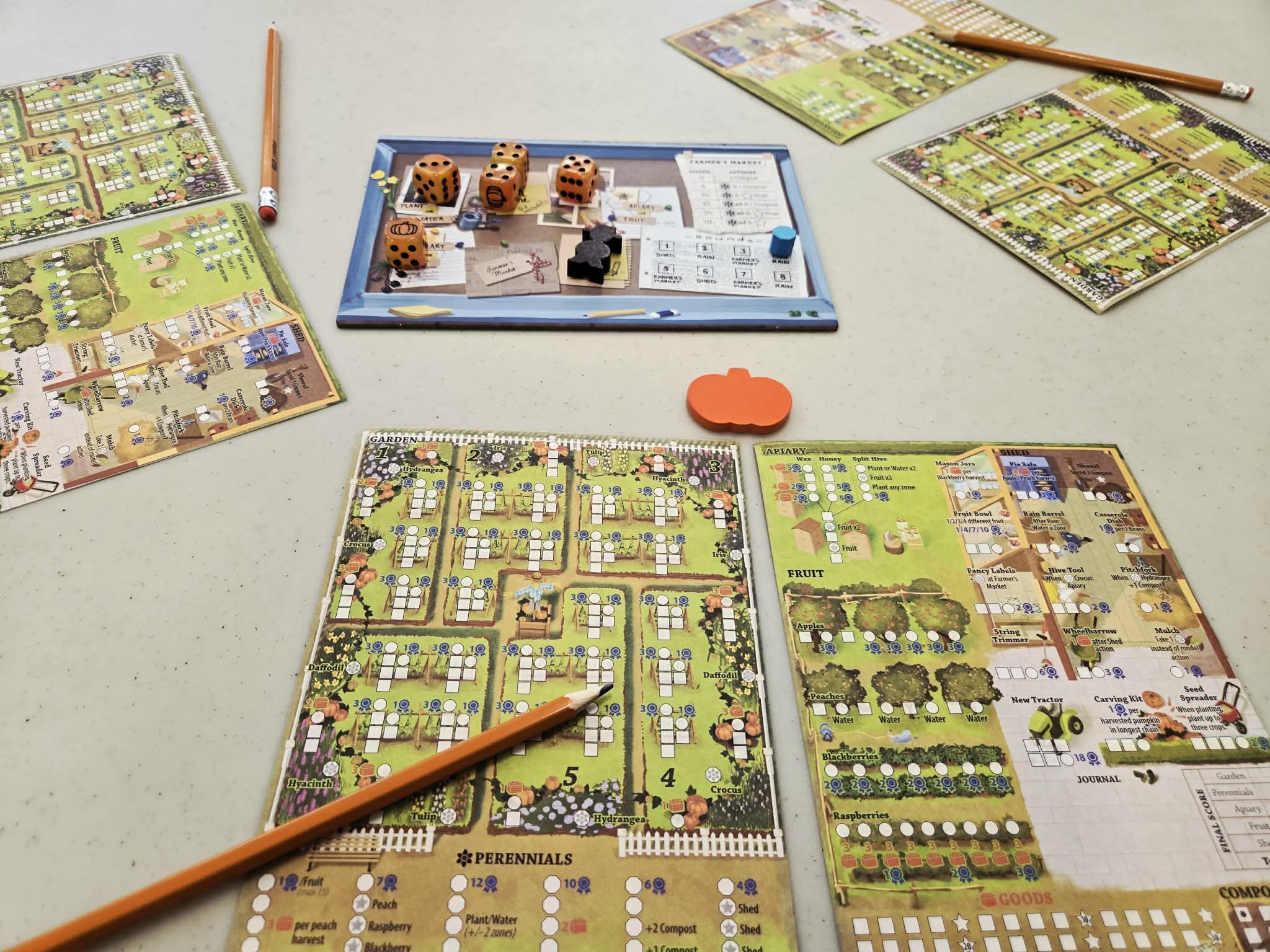
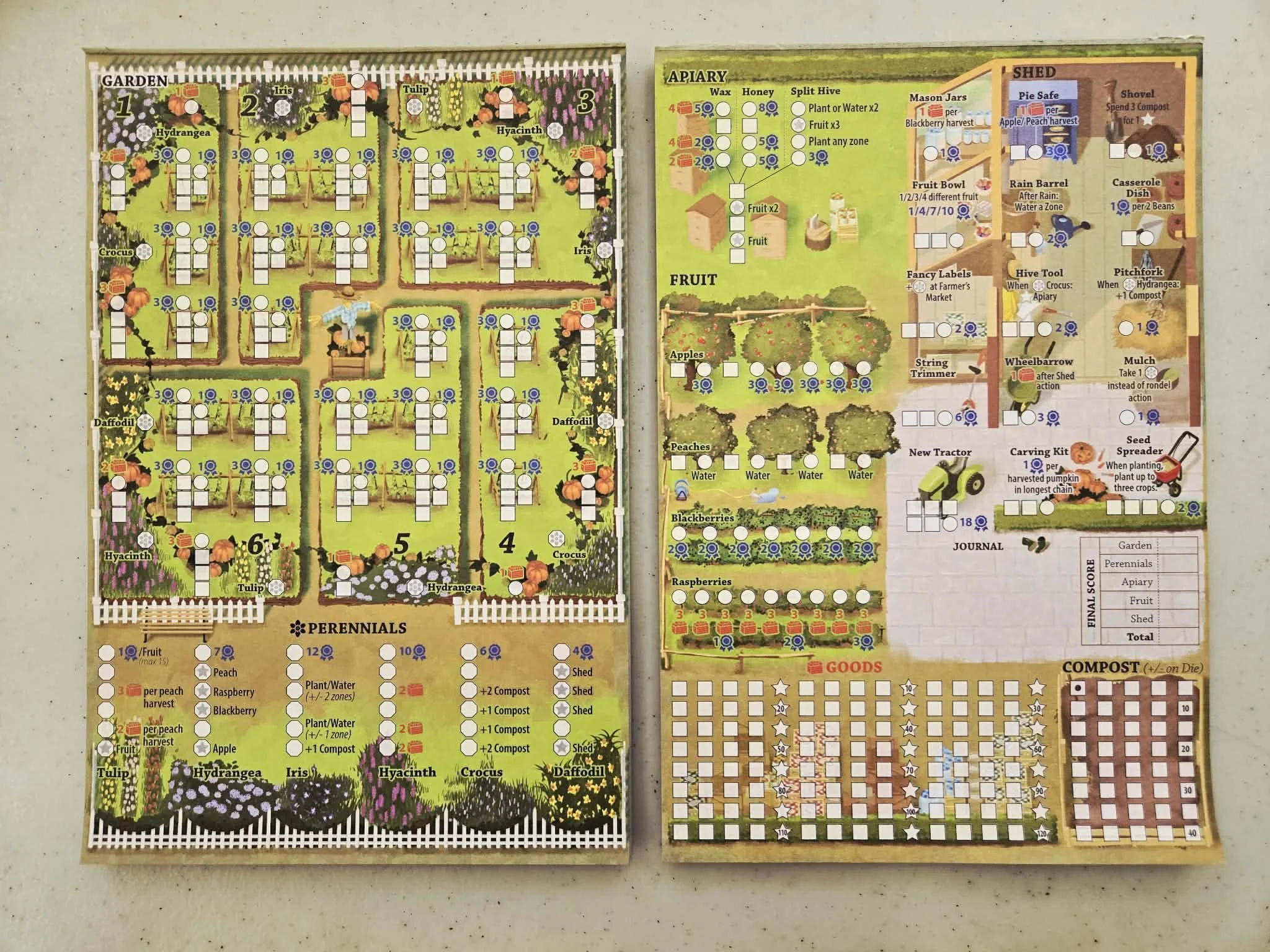
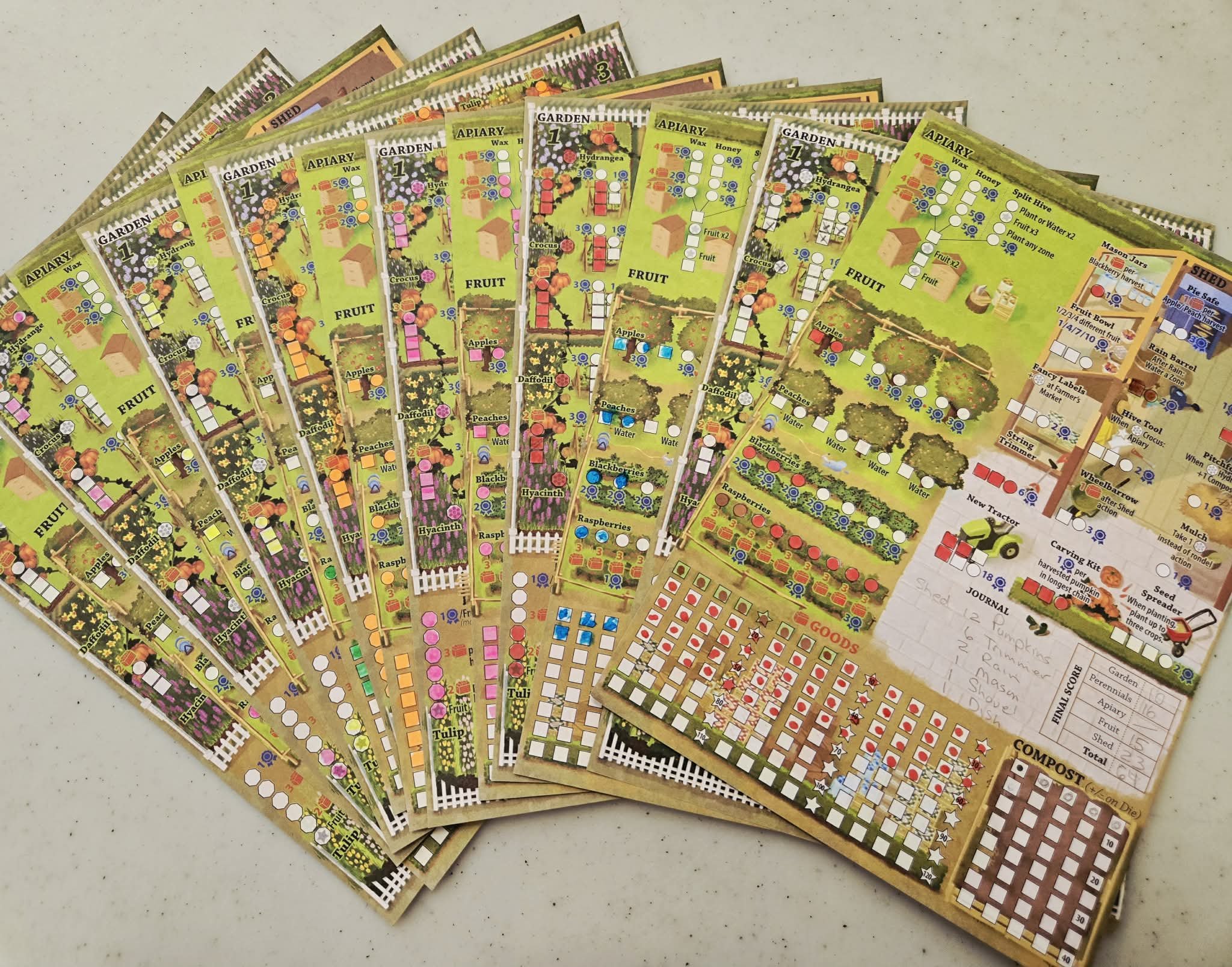
The game is set up by each player receiving their own garden plot and orchard score sheet. These are printed both back and front so each page will play two games. Throughout the game, players will be marking off boxes as they plant, harvest, improve and invest throughout their farm.
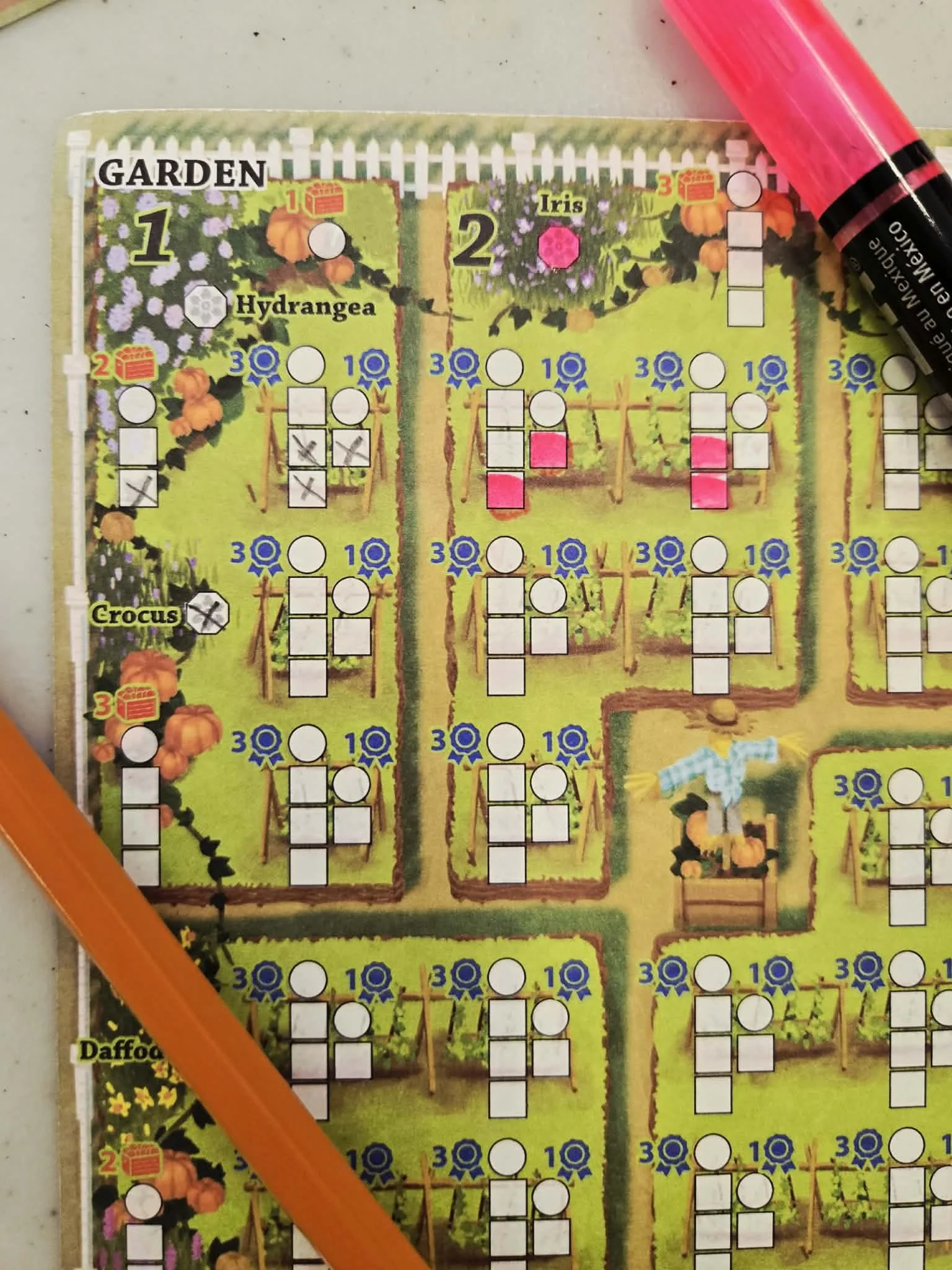
We found after playing this that although pen and pencil work fine on the paper sheets, they can be a bit difficult to see. On subsequent plays, we switched to using markers and highlighters which made it much easier to see at a glance exactly what you had accomplished. It does mean that sheets can only be used once though, whereas if you use pencil, you can rub out the marks and reuse them.
The game proceeds in three phases per round: planning, gardening and events. During the planning phase, six-sided dice are rolled to determine what actions will be available to players and in what zone of their garden. This is decided by what is listed on the rondel and what number of the die is showing. Actions include planting crops or flowers, watering crops, tending to the orchard, investing in the shed and equipment, gathering goods and compost and selling at the farmer's market.
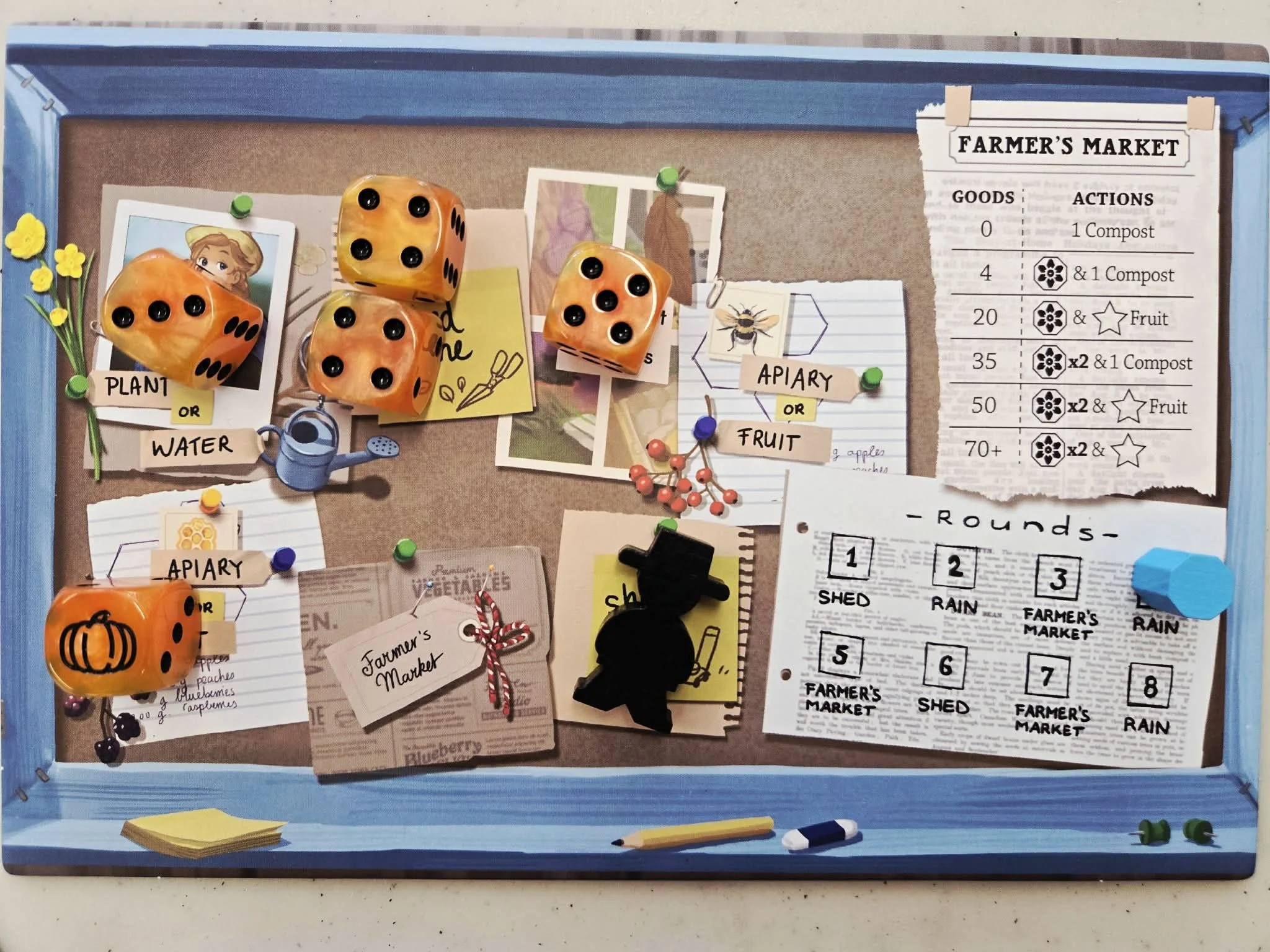
The gardening phase proceeds with players following through with the actions they selected from the rondel. Each player may only take one action per turn unless they have somehow been granted a bonus action (marked by the grey stars throughout the garden boxes). For the first few rounds, I suggest going through these turns one player at a time. Once everyone has a good understanding of how everything works, you can take all turns simultaneously to save time.
The event phase consists of one of the rondel actions that happens for all players at the same time. Which action that will take place is listed on the rondel board with numbered rounds.
At the end of the game, points are scored based on how efficiently you have curated your property and how much you have been able to harvest.
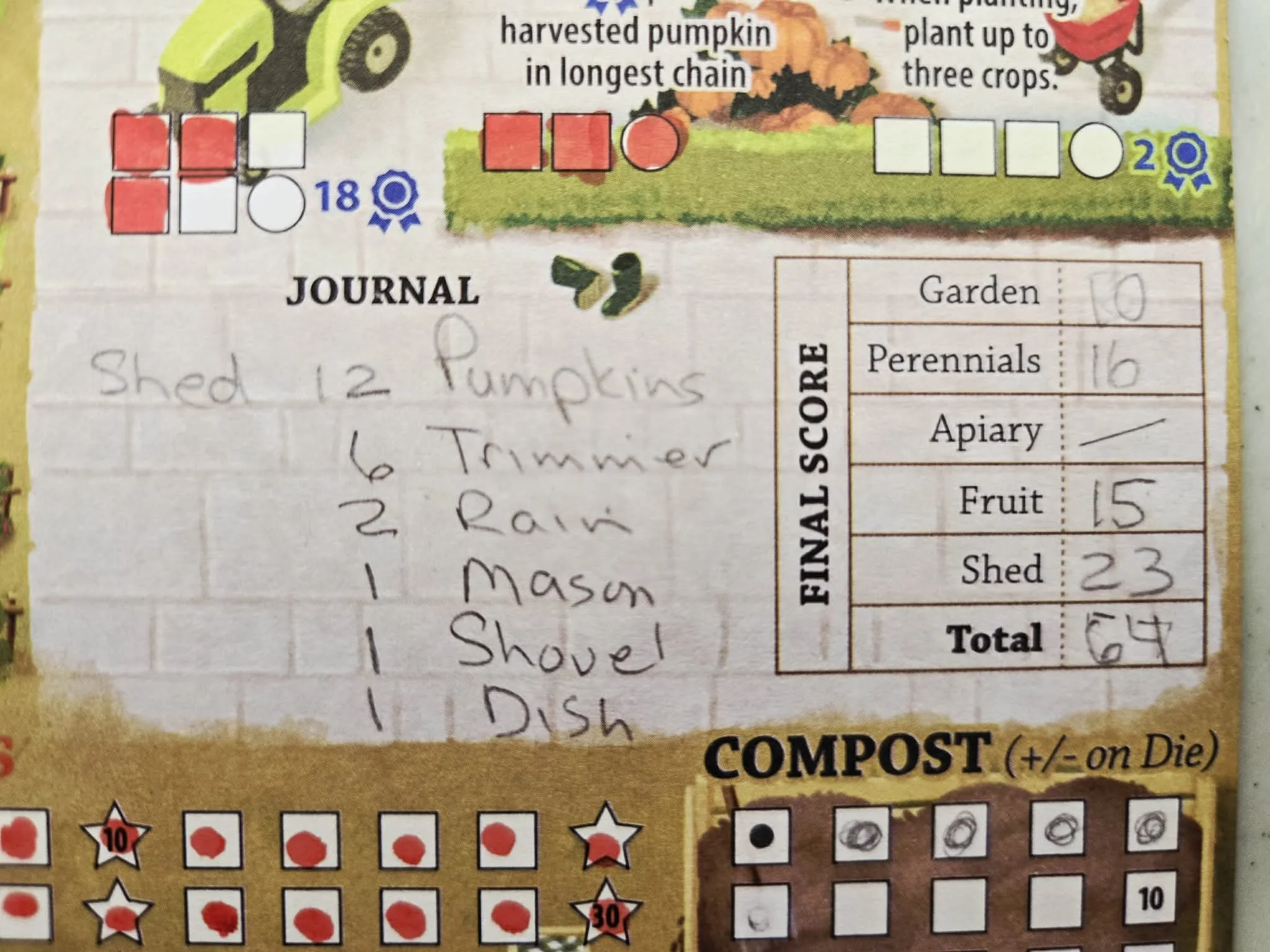
One of the best elements of this game is just how many different ways you can play it. One game you might want to dedicate your efforts to filling every plot of your garden and growing all of the crops to full size. The next game, you might want to grow fruit trees and harvest from the apiary. Then you might decide to fill your shed with all kinds of tools and equipment that make your job easier and the farm more prosperous. For a relatively inexpensive game, it has a lot of replay value. Just look at how many times our family has played it! (Remember, those sheets are front and back!)
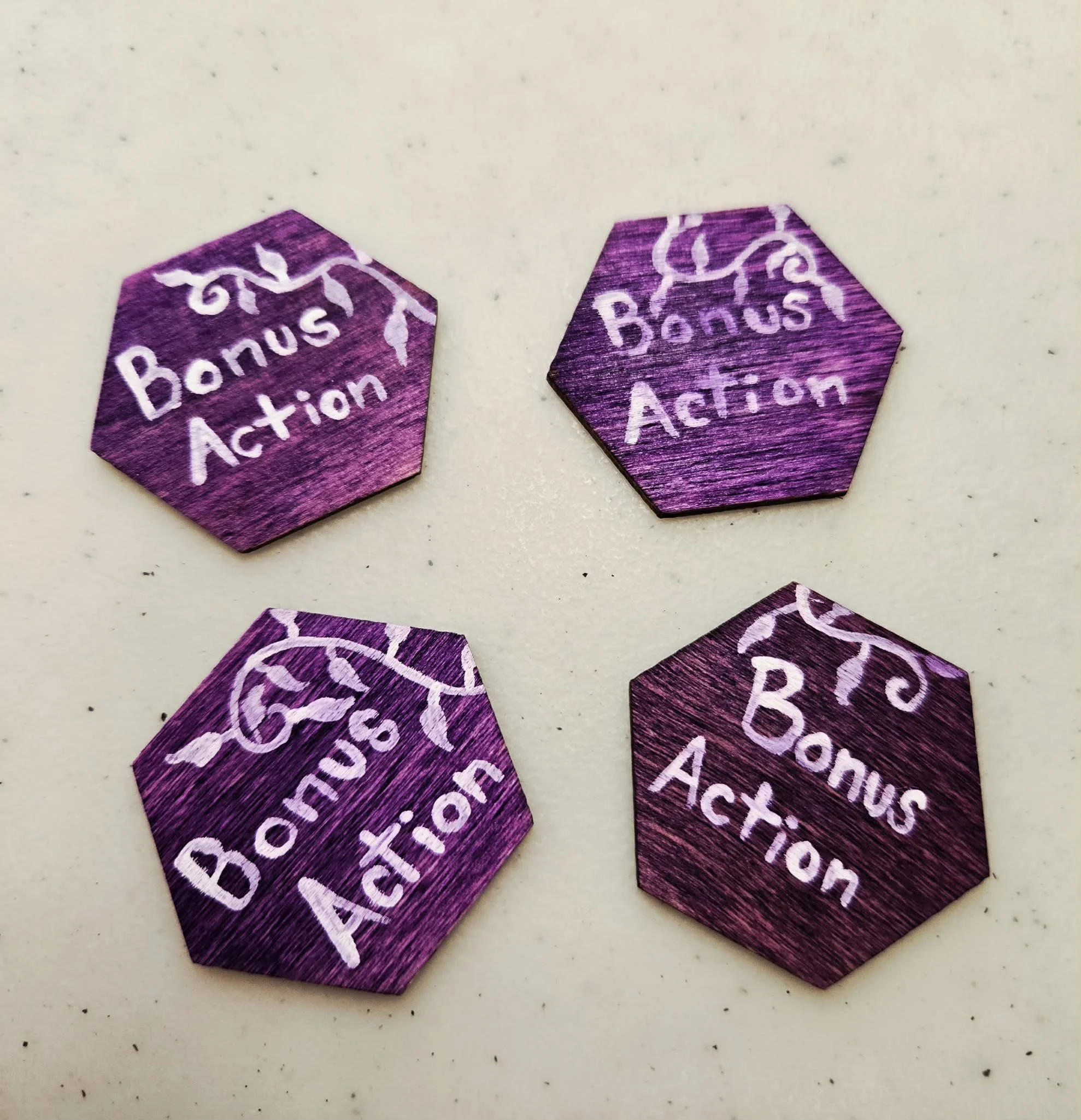
If I were to say anything was missing from this game, it would just be some pieces to remind you of what you have available, but that might just be me getting older and having less of a memory. During play, it's possible for you to acquire multiple bonus actions and even chain those actions into even more actions. It can be difficult to remember how many actions you have spent and how many you still have available. For this, I made a few wooden tokens to basically use as action currency.
Then comes the shed. The shed is loaded with all kinds of really interesting items and each one on the pad does have minimal description of what it does. There are also more detailed descriptions in the rule book. However, as you acquire more and more shed equipment, it can be difficult to keep straight which ones you have and what they all do. For this, I just printed up little paper slips with the full description that you can place in front of you after you have acquired it. This was a super simple fix to the minor problem and anyone could do it to make the game flow more easily.
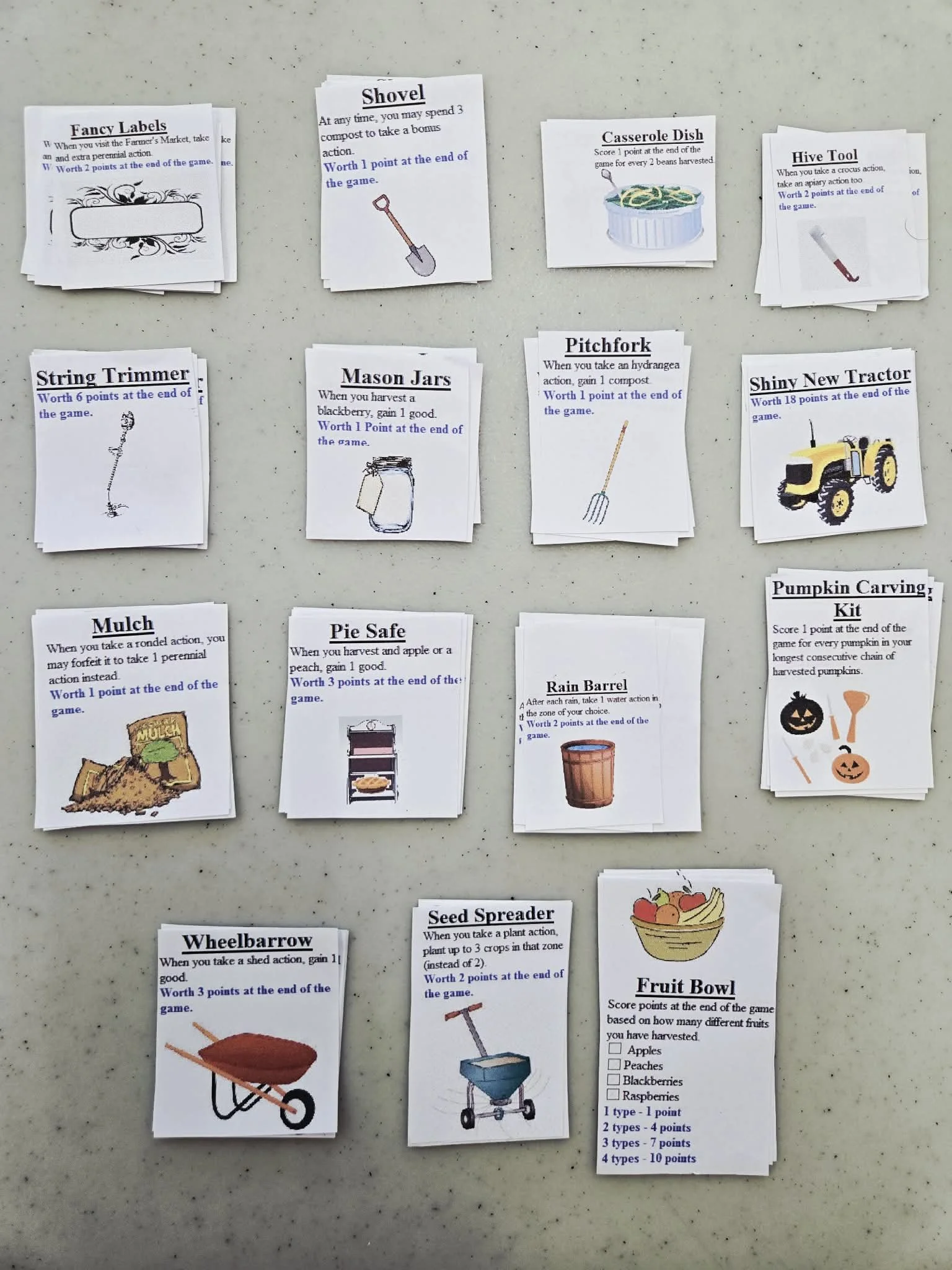
The game box has plenty of space to accommodate these added pieces!
My favourite thing about this game is that although it is competitive, there is very little player interaction. You can kind of do your own thing and be left alone to strategize. As a person who prefers co-operative games, this really appeals to me. The only way to interfere with another player's plan is to choose the action from the rondel that they were intending on taking (two players can not take the same action unless there are two dice assigned to it). Even then, choosing actions just in spite of another player would be disadvantageous for you and only your garden will suffer for it.
Recently, Three Sisters has gotten an upgrade as Three Sisters: Harvest Edition. This version of the game has all of the features of the base game mentioned above but has additional “Chapter” features that add a story element to the game. Certain events or actions happen relative to what is happening in the story. I have not yet had a chance to play the Harvest Edition yet but I have a copy at home waiting for me!
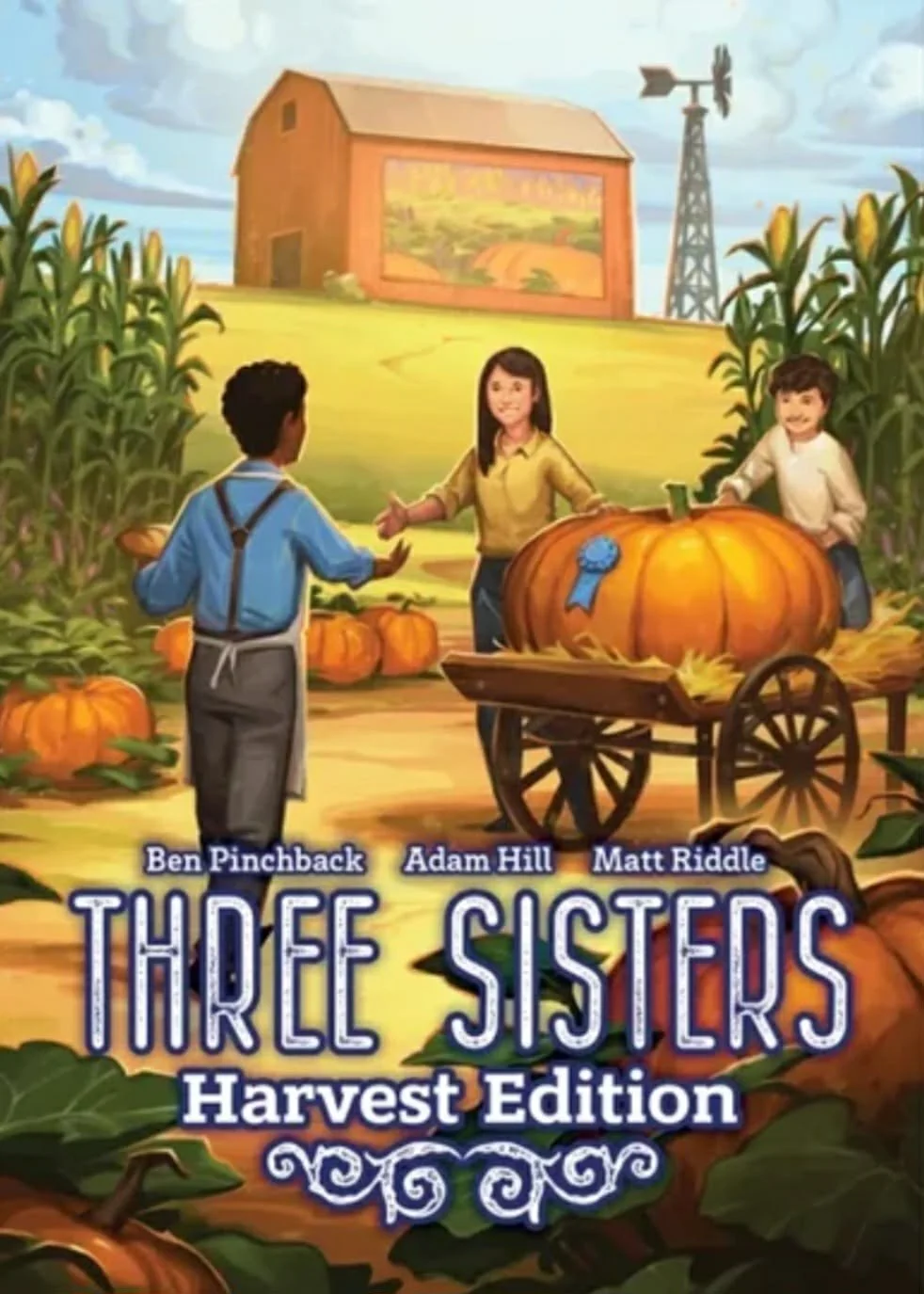
The game takes 45-60 minutes to play depending on how many players there are. Both versions of game support ages 14 and up and up to four players, but do also have a special rules modification to play solo. The average retail price is around $50 so it has amazing value for the cost!
If you want to give this game a try, come play our demo game in the shop!